
Dental Implants · How They Work · Casper, WY
Understand what's going in your mouth before anyone touches it.
A dental implant replaces a missing tooth root, restoring function, appearance, and the bone health nothing else can. Here's how the pieces fit together.
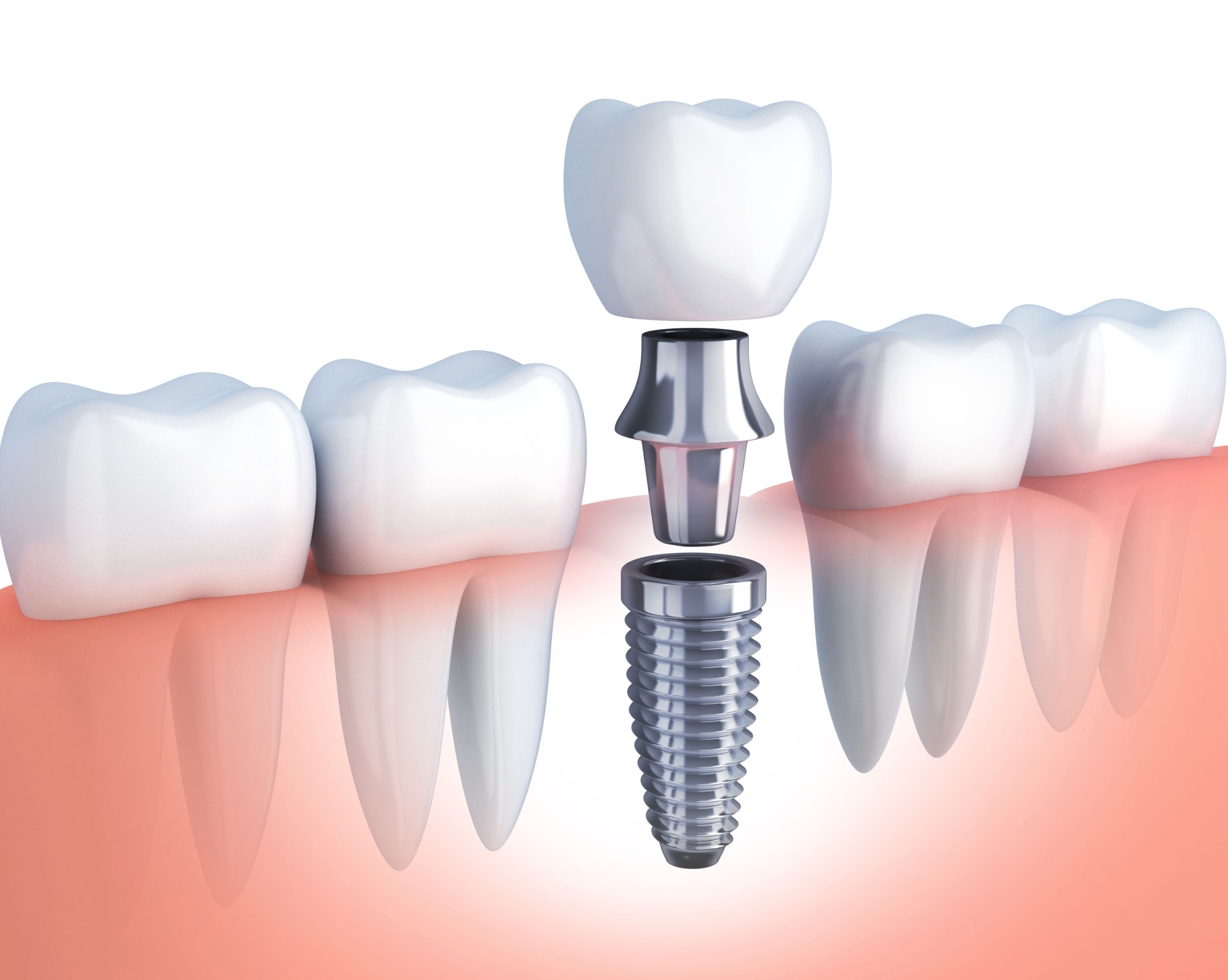
Three parts, one new tooth
Titanium root. Custom connector. Lifelike crown.
A dental implant has three parts: a titanium post that becomes your new tooth root, a custom abutment at gum level, and a lifelike crown on top. Titanium is biocompatible and very strong, with decades of surgical use behind it. Once the implant fuses with your jawbone over 3 to 6 months, it functions like a natural tooth.
The titanium post
Surgically placed into the jawbone below the gum line, it becomes your new tooth root. Titanium is biocompatible, lightweight, very strong, and has decades of surgical success behind it.
The custom abutment
A titanium connector that sits at gum level, joining the implant to the tooth above. Once the crown is placed, you never see it.
The crown
Your visible new tooth, secured to the abutment and matched to your smile. It sits at the gum line and looks like a natural tooth.
The part nobody tells you
Missing teeth quietly reshape your face.
Tooth roots signal your body to keep growing healthy jawbone. Without them, the signal stops and bone erodes, leaving the sunken, older look that missing teeth eventually cause. Dentures cannot stop it: they rest on the gums, so the bone beneath them keeps eroding.
An implant essentially becomes a new tooth root, prompting your body to maintain bone, preserve your facial structure, and retain a more youthful appearance. Dentures and tooth-supported bridges do not replace the root, so they cannot do this.
Which implant path fits you
From one tooth to a whole smile.
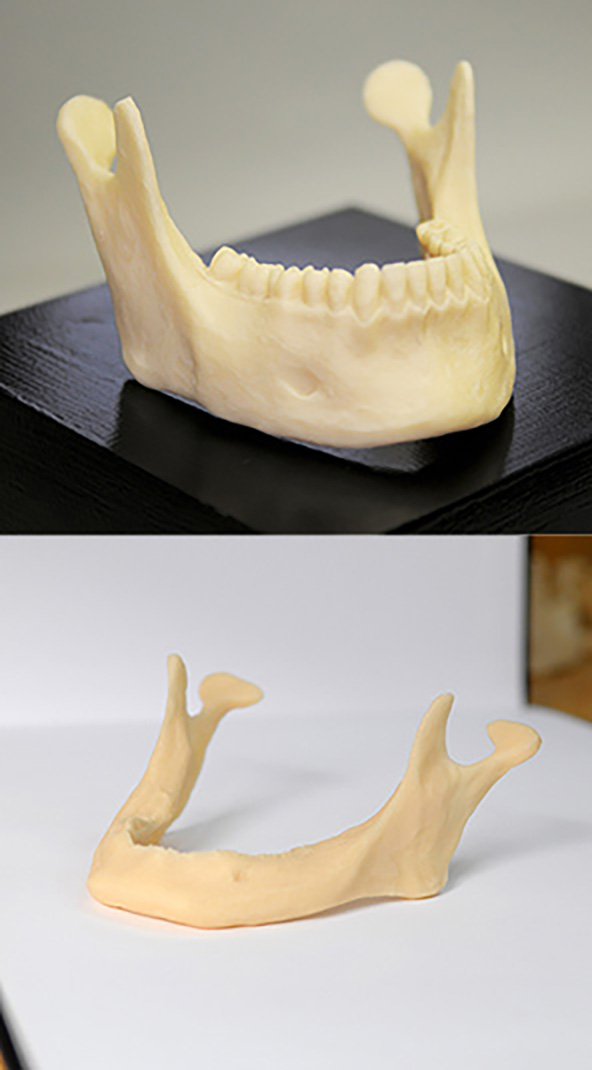
Wyo Dental Implants offers three implant paths: single implants for individual missing teeth, fixed full-arch Teeth in a Day on as few as four implants, and implant-retained snap-on dentures. Most adults in good health are candidates, and a CBCT scan at the initial consultation shows which path fits your bone before you decide anything.
Single dental implants
One missing tooth, one implant, or several individual implants for teeth missing in different places. Function and appearance restored without touching neighboring teeth.
Snap-on / implant-retained denture
A denture that snaps onto implants. We can fabricate a beautiful set, though we usually recommend fixed treatment instead: snap-ons cost less today but bring recurring relines and remakes, and most patients can upgrade to fixed later.
Health, function, confidence
Implants are a whole-body decision.
Replacing missing teeth changes more than a smile. Chewing improves digestion, removing failing teeth removes infection that can reach the bloodstream, and implants preserve the jawbone that keeps your face from sinking. Most patients experience minimal discomfort from implant placement.
Health & diet
A healthy body begins in the mouth. Crunchy, crisp, nutrient-dense foods come back on the menu, chewing improves digestion, and removing failing teeth removes infection that can reach the bloodstream.
Appearance & confidence
Implants look natural and preserve the jawbone that keeps your face from sinking. Smile in photos again without thinking about it.
Function & convenience
Fixed implant teeth are not removed at night. Care is simple: brush, floss, waterpik. No soaking cups and no adhesives.
What to expect over the years
How long each part of a dental implant lasts.
Dental implants are designed to provide long-term tooth replacement and can last for decades with appropriate care. In pooled published studies, about 96% of implants were still in place at 10 years, and roughly four in five at 20 years. The implant, the abutment, and the prosthetic teeth each have a different expected lifespan, so a realistic plan looks at all three.
The implant
The titanium post fused into your jawbone is the longest-lasting part. With healthy gums and bone, regular hygiene visits, and no smoking, it is the part most likely to stay with you for decades.
The abutment
The connector between the implant and your teeth is a mechanical part. It and its screw can loosen or wear over the years, and they can be tightened or replaced without disturbing the implant.
The prosthetic teeth
Your crown or full-arch bridge does the daily work of chewing, so it sees the most wear. Zirconia resists chipping and wear well, and teeth can be repaired or remade on the same implants if they ever need it.
Implant basics, answered
Good decisions start with good information.
What is osseointegration, and why does it matter?
Osseointegration is the process of your implant and jawbone fusing together during healing. It is the foundation of your new smile. A few individual implants may take 3 to 6 months to integrate, but when an entire arch is splinted together, you can receive fixed teeth the same day.
Does getting an implant hurt?
Most patients experience minimal discomfort. Most manage with over-the-counter Tylenol or Motrin for a couple of days, and many do not need the prescription they are sent home with.
Why not just get a snap-in denture?
A snap-on denture is an option, and we can fabricate a beautiful set, but we do not usually recommend it. It costs less now, but it is far less satisfying, and recurring relines and remakes add up over a lifetime. Most snap-in patients can upgrade later to the fixed Teeth in a Day treatment.
How long do dental implants last?
Dental implants are designed to provide long-term tooth replacement and can last for decades with appropriate care. In pooled published studies, about 96% of implants were still in place at 10 years and roughly four in five at 20 years. The implant, the abutment, and the teeth attached to them each have a different expected lifespan: the implant in the bone is the longest-lasting part, while the abutment and the teeth are working parts that can be repaired or replaced without replacing the implant.
How is an implant different from a bridge?
A tooth-supported bridge is anchored to the teeth on either side of the gap, which usually means reshaping those teeth, and it does not replace the missing root. An implant stands on its own, leaves neighboring teeth untouched, and replaces the root, which helps the jawbone beneath it stay healthy.
Book a Consultation
Ready to know your options?
An initial consultation with CBCT imaging tells you exactly which implant path fits your mouth, your goals, and your budget, and it ends with one written, all-inclusive price.
1771 Goodstein Dr, Casper, WY 82601